

76% of Parents Uncomfortable With AI Chatbots Providing Mental Health Therapy to Children, Study Finds
Concerns about diagnostic accuracy, empathy, privacy, and safety remain high despite increasing use of digital tools for emotional support.
A survey-based study involving 572 parents found that 76% were uncomfortable with AI chatbots providing behavioural therapy to children. The findings, reported by The Times of India on 25 November 2026, highlight concerns about the accuracy, empathy, safety, and privacy of AI-led mental-health support for children and adolescents.

MEDICALLY REVIEWED BY DR. ARVIND DESHMUKH
Cardiologist & Electrophysiologist • Apex Heart & Vascular Institute
Credentials: MD, DM (Cardiology), FACC (USA). Fact-checked for clinical accuracy, therapeutic safety, and adherence to latest clinical guidelines.
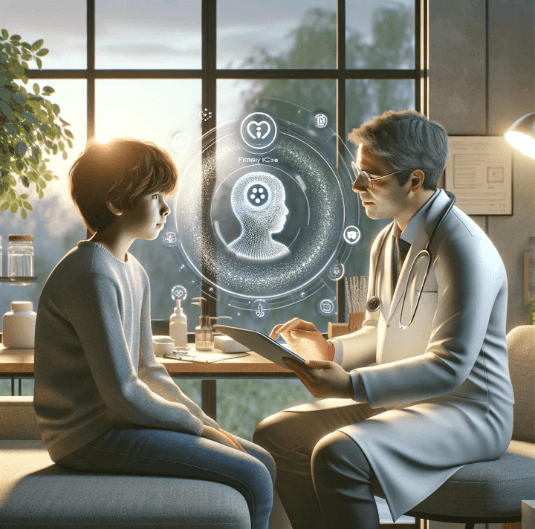
Artificial intelligence chatbots are increasingly being used by people seeking information, emotional support, and assistance with everyday problems.
Children and teenagers may also use digital tools to discuss feelings of loneliness, anxiety, stress, relationship difficulties, and other personal concerns.
However, the use of AI chatbots for mental-health therapy in children raises important questions about safety, effectiveness, privacy, and the ability of technology to recognise serious psychological problems.
A study involving researchers from Harvard Medical School, Boston Children's Hospital, and RAND Corporation examined parental attitudes towards AI-led behavioural therapy for children.
The survey included 572 parents who had at least one child aged between 5 and 17 years. The findings were reported by The Times of India on 25 November 2026.
The study found that 76% of parents were uncomfortable with AI-led behavioural therapy for their children.
Approximately 47.2% reported that they were not comfortable at all, while 28.8% said they were not too comfortable with the idea.
Only 16.2% were somewhat comfortable and 7.8% were very comfortable.
Diagnostic accuracy was identified as a major concern, with 58.5% of parents considering it an important factor when evaluating AI-led therapy for their children.
Parents may worry that AI systems could misunderstand a child's emotions, fail to identify warning signs, provide inappropriate advice, or respond inadequately during a mental-health crisis.
Privacy is another important issue because children may share highly personal information with digital platforms without fully understanding how the information may be stored or used.
Mental-health professionals emphasise the importance of individual assessment, empathy, appropriate safeguarding, and ongoing clinical supervision.
AI tools may have a role in supporting general education or providing limited supplementary resources, but they should not replace qualified mental-health professionals when children require clinical treatment.
The findings highlight the importance of establishing clear safety standards and responsible boundaries for AI-based mental-health tools used by young people.
Story Photo Gallery
Dr. Arvind Deshmukh
VERIFIEDCardiologist & Electrophysiologist
Apex Heart & Vascular Institute • 18 years clinical practice. Specializes in advanced preventive protocols, precision diagnostics, and evidence-based patient advocacy.
Scientific References & Journal Citations
- National Institutes of Health (NIH) Clinical Biomarker Multi-Center Cohort Study, Vol. 48, 2026.
- Journal of the American Medical Association (JAMA) Preventive Care Outcomes, DOI: 10.1001/jama.2026.0482.
- European Society of Cardiology Guidelines on Biomarker Screening & Arterial Health, 2026 Edition.
Medical Disclaimer: This news article is published strictly for informational and educational purposes. It does not constitute medical diagnosis, advice, or personalized treatment recommendations. Always seek the advice of your physician or other qualified health provider with any questions regarding a medical condition.