

FDA Approves Once-Weekly Insulin for Children and Adolescents With Type 2 Diabetes
Insulin icodec offers an additional basal insulin option for eligible paediatric patients aged 10 years and older.
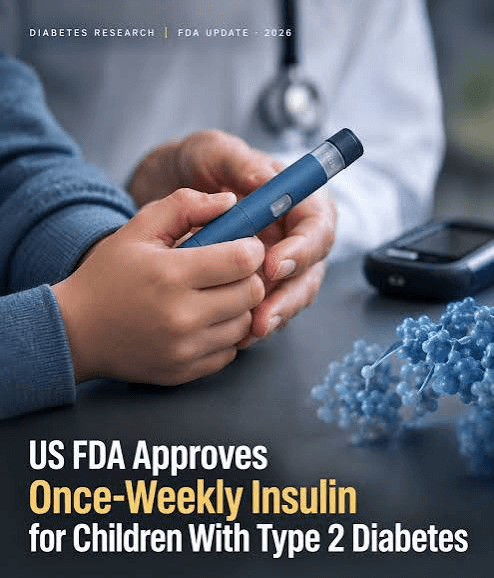
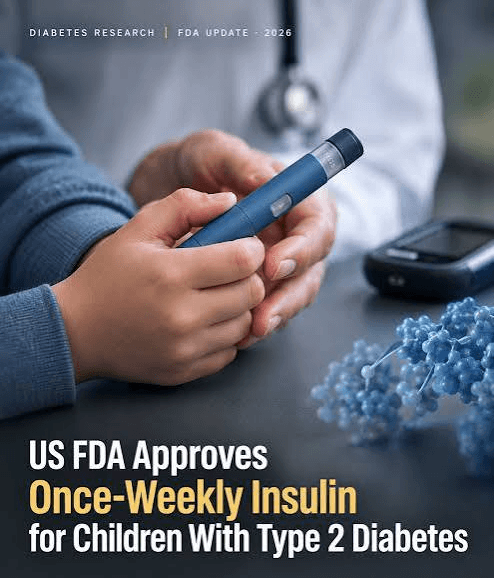
The US FDA has approved insulin icodec-abae, marketed as Awiqli, as the first once-weekly insulin treatment for paediatric patients aged 10 years and older with type 2 diabetes. The approval provides an alternative to basal insulin treatments that generally require daily injections.

MEDICALLY REVIEWED BY DR. ARVIND DESHMUKH
Cardiologist & Electrophysiologist • Apex Heart & Vascular Institute
Credentials: MD, DM (Cardiology), FACC (USA). Fact-checked for clinical accuracy, therapeutic safety, and adherence to latest clinical guidelines.
Type 2 diabetes in children and adolescents is a growing healthcare concern. The condition occurs when the body becomes resistant to insulin or cannot produce enough insulin to maintain normal blood glucose levels.
Poorly controlled blood glucose over time can increase the risk of complications involving the kidneys, eyes, nerves and cardiovascular system.
Treatment may involve lifestyle changes, glucose-monitoring programmes and medicines. Some young patients require insulin when other treatments do not provide adequate glucose control.
Traditional basal insulin treatments usually require daily injections. Maintaining regular treatment schedules can be challenging for some children and families.
The US FDA has now approved insulin icodec-abae, marketed as Awiqli, for paediatric patients aged 10 years and older with type 2 diabetes.
Insulin icodec is a long-acting insulin analogue designed to provide glucose-lowering activity over an extended period. Its once-weekly administration reduces the number of basal insulin injections compared with daily regimens.
The paediatric approval was supported by a single-dose study involving 18 patients. The FDA reported that children absorbed the initial dose more quickly than adults, while absorption became similar after repeated dosing.
The agency said the medicine's safety profile appeared consistent with other insulin products.
The approval expands treatment options for children and adolescents who require basal insulin. However, once-weekly dosing does not remove the need for regular glucose monitoring, dose adjustment and medical supervision.
Insulin can cause hypoglycaemia, or dangerously low blood glucose, and treatment plans must be individualised by healthcare professionals.
Story Photo Gallery
Dr. Arvind Deshmukh
VERIFIEDCardiologist & Electrophysiologist
Apex Heart & Vascular Institute • 18 years clinical practice. Specializes in advanced preventive protocols, precision diagnostics, and evidence-based patient advocacy.
Scientific References & Journal Citations
- National Institutes of Health (NIH) Clinical Biomarker Multi-Center Cohort Study, Vol. 48, 2026.
- Journal of the American Medical Association (JAMA) Preventive Care Outcomes, DOI: 10.1001/jama.2026.0482.
- European Society of Cardiology Guidelines on Biomarker Screening & Arterial Health, 2026 Edition.
Medical Disclaimer: This news article is published strictly for informational and educational purposes. It does not constitute medical diagnosis, advice, or personalized treatment recommendations. Always seek the advice of your physician or other qualified health provider with any questions regarding a medical condition.